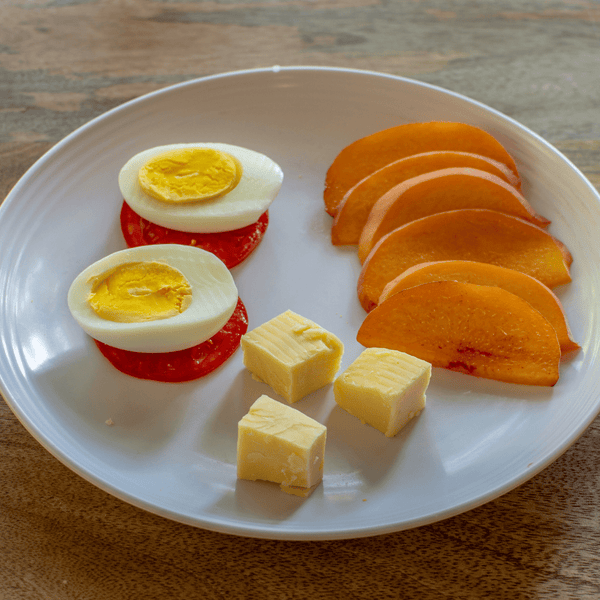

Lose Weight Without Counting Calories
Weight loss works on the simple principle of “calories in vs calories out.”
But somewhere between weighing almonds and calculating how much milk went into your coffee, calorie counting can start feeling like homework.
So it’s worth asking a different question: Can you lose weight without counting calories at all? While calorie balance still matters, understanding how a calorie deficit actually works puts weight loss into a more realistic, biological perspective.
The answer is not very straightforward.
Let’s explore.
Quick Answer: Can You Lose Weight Without Counting Calories?
Yes. Many people successfully lose weight without tracking calories by prioritizing protein, fiber, minimally processed foods, and hunger awareness. While calories still matter, they do not always need to be counted manually.
The key difference is that you're managing calorie intake indirectly rather than measuring it directly. Habits that improve fullness and reduce cravings often lead to lower overall food intake naturally.
Why Calorie Counting Became So Popular
For decades, weight loss has been explained in the simplest way possible: eat fewer calories than you burn, and the weight will come off.
It makes sense, doesn’t it?—if you give the body less energy than it needs, it should tap into stored fat.
Besides, calories were easy to measure, easy to compare, and easy to turn into rules. Food labels listed them clearly.
Fitness trackers promised to “burn” them. Apps made it possible to log them down to the last bite.
Reducing weight loss to calories also fit perfectly with the diet industry. It allowed complex biological processes to be turned into simple targets: 1500 calories a day, 500 calories burned, a 300-calorie deficit.
Counting calories became a way to standardise dieting, making it easier to sell plans, programs, and products around a single metric.
Another limitation of calorie counting is that it can make people focus on numbers instead of sustainable habits. Long-term weight loss is often easier when attention shifts toward food quality, hunger management, and consistent eating patterns rather than constant tracking.
Where Does Calorie Counting Fall Short?
While reducing weight loss to net caloric intake makes processes simple, it also ignores how real people eat, feel, and live.
Here’s where it falls short:
1. It Assumes the Body Works Like a Calculator
Calorie counting is based on the idea that the body simply adds and subtracts energy. In reality, the human body isn’t such a straightforward machine—it’s a living system that adapts.
When you eat less, your body often responds by slowing down metabolism, increasing hunger signals, and conserving energy.
This means the same calorie intake can produce very different results over time. For example, someone who consistently sleeps poorly or experiences high stress may find weight loss harder even when calorie intake remains unchanged.
2. It Ignores How Different Foods Affect the Body
Two foods with the same calorie count can behave very differently once eaten.
Some foods digest quickly and leave you hungry again within hours, while others keep you full and steady for much longer.
Calorie counting treats all calories as equal, without accounting for how food impacts digestion, fullness, energy levels, and cravings.
For example, an average 100 calorie snack might be loaded with artificial sweeteners, flavors, and have no real nutritional value, while 100 calorie snacks that prioritise protein and fiber can provide far greater satiety and nutritional value in the same calorie range.
3. Hunger and Satiety Are Reduced to Willpower
When calorie limits are strict, hunger is often framed as something to “push through.”
But hunger isn’t always a failure of will power—it’s a biological signal.
Ignoring it can lead to overeating later, binge-restrict cycles, or constant food preoccupation.
Calorie counting doesn’t teach you how to eat in a way that naturally keeps hunger in check. Persistent hunger isn’t a discipline issue—it’s often biological, which is why learning how to stop being constantly hungry can completely change the dieting experience.
4. It Overlooks Hormones That Drive Weight Gain and Loss
Weight loss isn’t just about how much you eat, but how your body responds to it.
Hormones that regulate blood sugar, stress, and appetite play a major role in whether calories are stored as fat or used for energy.
Calorie tracking rarely accounts for these internal signals, even though they heavily influence results.
It also fails to account for the slightly different weight loss patterns in males and females. Understanding how a calorie deficit for women works can help explain why factors such as hormones, appetite, and energy needs often influence results differently. Stress, digestion, and appetite are closely connected through the brain–gut connection, which heavily influences cravings and fat storage.
5. It Encourages Short-Term Control, Not Long-Term Habits
Most people can count calories for a few weeks or months, but very few can do it forever. Once tracking stops, old patterns often return.
Instead of building sustainable eating habits, calorie counting can create dependence on numbers rather than confidence in food choices.
6. It Can Create an Unhealthy Relationship With Food
Constantly measuring, logging, and restricting food can turn eating into a source of stress.
Foods become “good” or “bad” based on numbers alone, not nourishment or enjoyment. Over time, this can disconnect people from their body’s natural cues and make eating feel more complicated than it needs to be.
Calorie counting falls short not because calories don’t matter at all, but because they are only one small piece of a much bigger picture.
How to Lose Weight Without Counting Calories
Yes, you absolutely can.
If you're wondering how to lose weight without counting calories, the key is to focus on food quality, hunger regulation, meal balance, and sustainable eating habits rather than tracking every bite. Following a structured meal plan for weight loss can make these habits easier to implement without relying on calorie-tracking apps.
And for many people, it’s actually the more sustainable way to lose weight. A simple rule is this: if your meals keep you satisfied for several hours and reduce the urge to snack constantly, you're often moving in the right direction even without tracking numbers.
The body already has an internal system that regulates hunger, fullness, and energy use.
When you eat foods that support this system, weight loss often happens naturally, without needing to track every bite.
When meals are built around enough protein, fiber, and real, minimally processed ingredients, the body stays fuller for longer.
Blood sugar remains more stable, cravings reduce, and mindless snacking becomes less frequent.
In this state, people tend to eat less overall, not because they’re forcing themselves to, but because they genuinely don’t feel the need to eat as much.
That said, calories don’t magically stop mattering. They just don’t need to be counted obsessively. When food quality is high and meals are balanced, calorie intake often self-regulates in the background. Many people find better long-term results when following structured low-calorie approaches that focus on food quality instead of constant tracking.
What to Focus On When You Stop Counting Calories
Oversimplified as it may be, calorie counting still has its benefits. And if you give it up, you need to replace it with other, more efficient systems, such as:
1. Eating Foods That Keep You Full, Not Just Fed
When you’re no longer tracking numbers, fullness becomes your biggest guide.
Meals and snacks that include enough protein, fiber, and healthy fats help you stay full for longer, reducing the urge to snack constantly or overeat later in the day. Choosing healthy snacks that support satiety can make this approach much easier to maintain between meals.
Make sure you plan your diet around them.
2. Paying Attention to How Food Makes You Feel
Instead of asking how many calories something has, notice how it affects your energy, digestion, and hunger levels.
Foods that leave you bloated, sluggish, or hungry soon after eating are usually not supporting your goals, even if they “fit” into a calorie limit. For many people, learning how to stop eating junk food is one of the fastest ways to improve hunger control and food quality without counting calories.
Many foods that disrupt digestion and hunger regulation fall into the category of the worst foods for gut health, even if their calorie count looks harmless.
3. Building Balanced Meals Without Overthinking
You don’t need perfect portions or food scales. Aim for balance: a solid protein source, fiber-rich ingredients, and enough volume.
This simple structure helps the body self-regulate intake without relying on external tracking. A useful visual guide is to build most meals around protein first, then add fiber-rich foods and enough volume to feel comfortably satisfied rather than overly full.
4. Choosing Snacks That Work With Your Body
Snacking can be a major slippery slope on a weight loss journey.
Highly refined, carb-heavy snacks often spike hunger and cravings. Replacing them with high protein low calorie snacks can help support fullness while making it easier to manage overall food intake naturally.
Choosing snacks that are protein-rich, high in fiber, and easy to digest makes a big difference.
Which is why we recommend 100 Cal Snacks—they’re portion-controlled, made with clean, real ingredients, and designed to be filling without feeling heavy, making them an easy choice when you want something convenient but supportive of your goals.
The formulation is gut-first which ensures your metabolism also works for you. Choosing high-protein, portion-controlled snack options makes it easier to manage hunger naturally without needing to track every calorie.
5. Listening to Hunger and Fullness Cues Again
Calorie counting can disconnect you from your body’s signals. When you stop tracking, it’s important to relearn what true hunger and comfortable fullness feel like.
Eating slowly and without distractions helps these cues come back online.
Key Takeaways
- Food quality often matters more than precise calorie tracking.
- Protein and fiber naturally help regulate hunger.
- Hunger and fullness cues can guide food intake effectively.
- Sustainable habits are usually easier to maintain than constant tracking.
When Calorie Counting Might Still Make Sense
Ultimately, calorie counting works best as a short-term learning tool, not a lifelong requirement.
For beginners, tracking calories for a short time can help build basic awareness around portion sizes and how different foods contribute to overall intake.
Calorie counting can also make sense for very specific goals, such as athletes training for performance, people preparing for a physique-based event, or those who have already built strong eating habits and want to fine-tune results.
In other cases, if you learn to be in sync with your body and eat accordingly, losing weight without counting calories becomes much more achievable without the burden of tracking every meal.